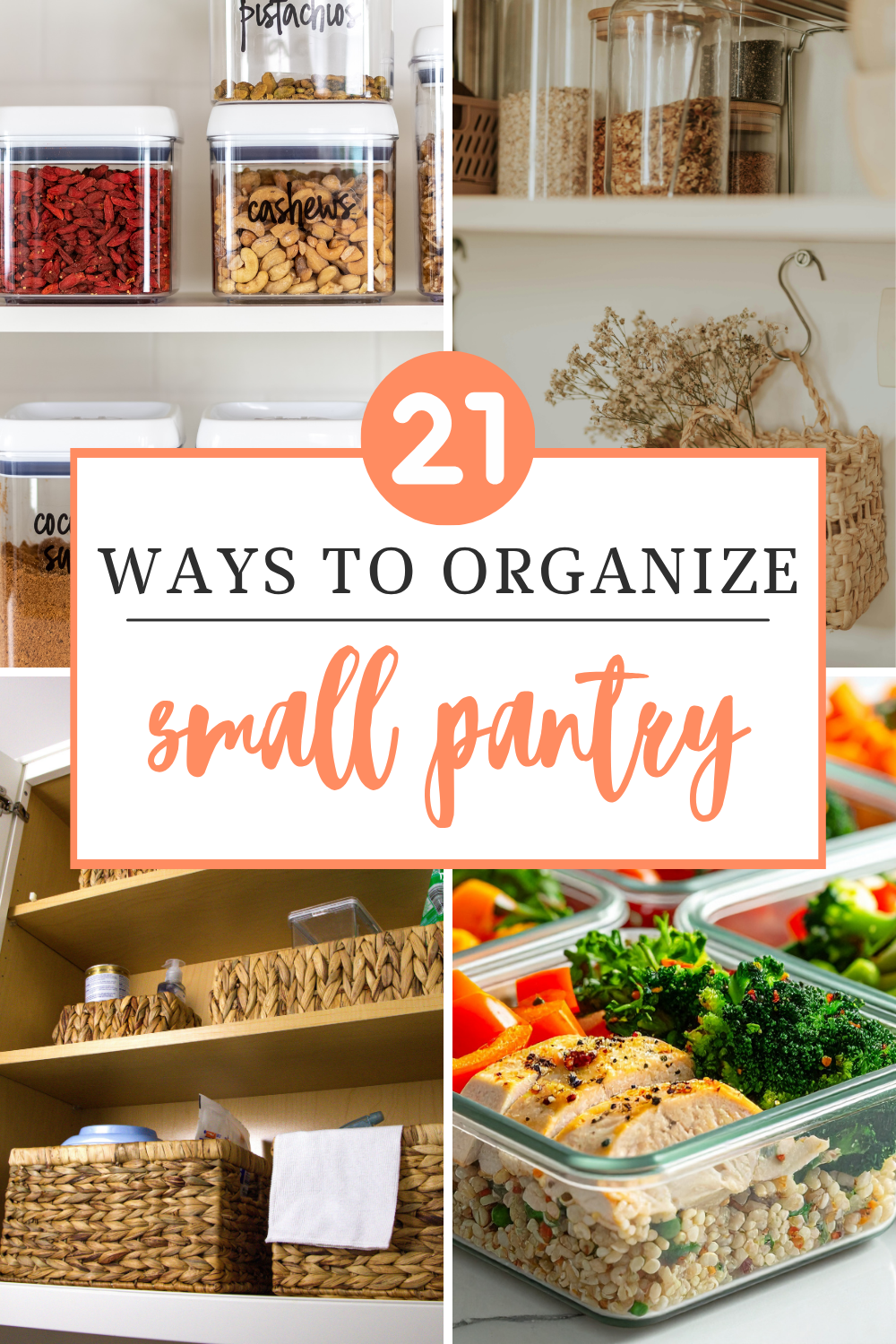
21 Small Pantry Organization Ideas to Maximize Your Space
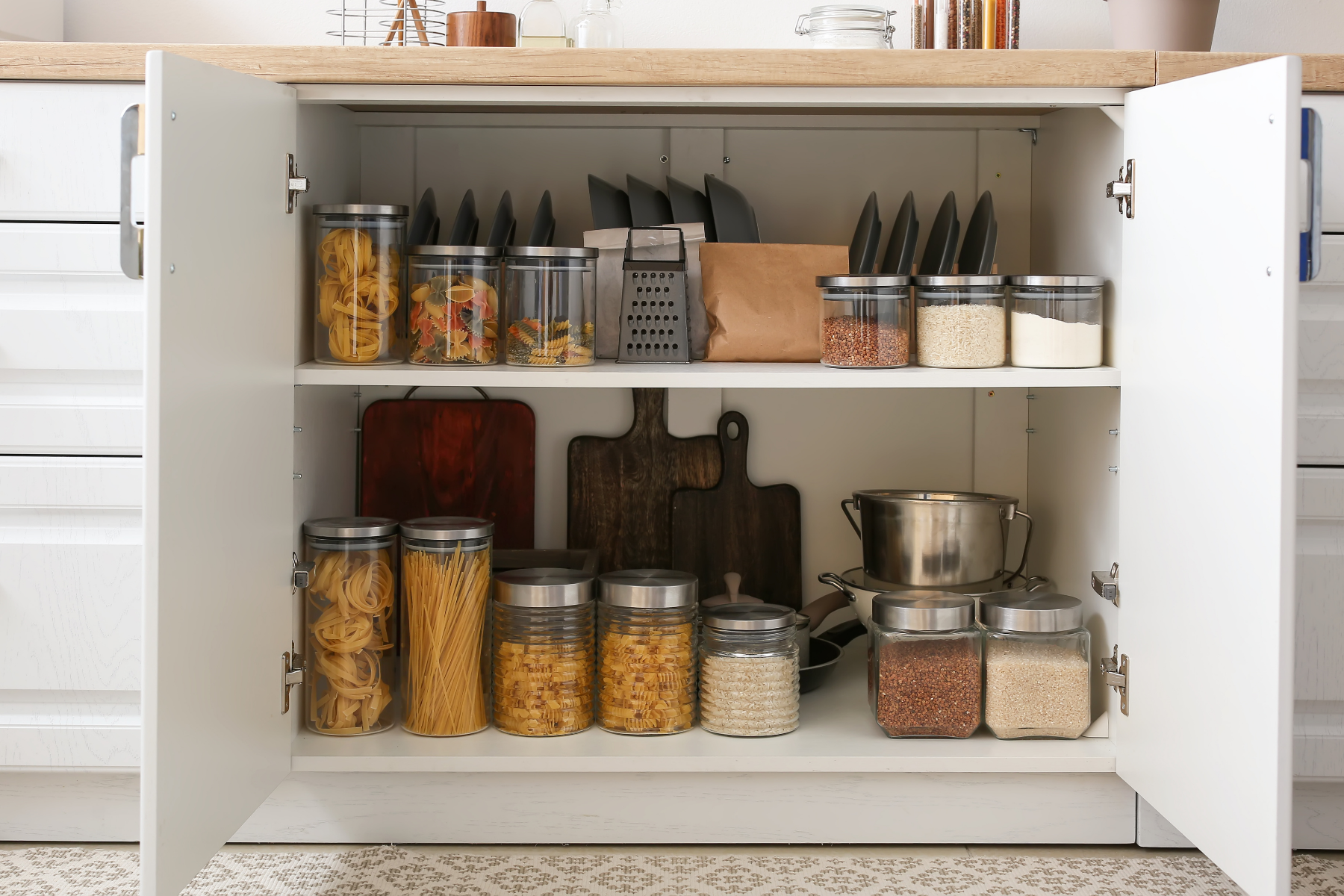
f you have a small pantry, you already know how quickly it can go from “I just organized this!” to “Why are there three open boxes of crackers and where did all these granola bars come from?”
A small pantry can be frustrating because there simply is not much room for error. One grocery trip where everything gets shoved onto whatever shelf has space, and suddenly you cannot find anything. Then you buy another bottle of ketchup because you did not realize there were already two hiding behind the cereal.
The good news is that you do not need a huge walk-in pantry or a perfectly coordinated collection of expensive containers to make a small pantry work.
Sometimes the simplest changes make the biggest difference.
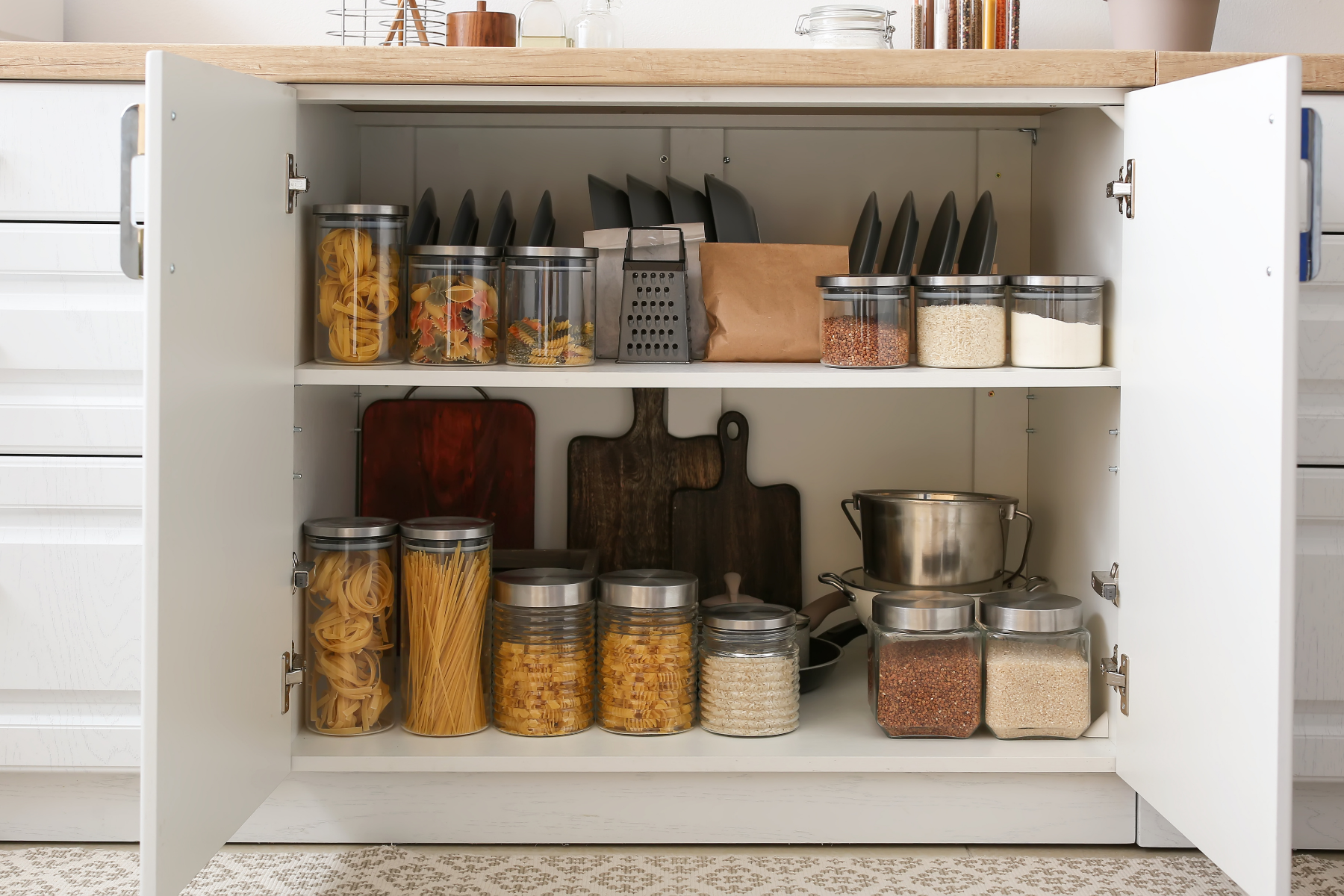
These small pantry organization ideas are all about making better use of the space you already have. Whether you have a tiny pantry closet, a few kitchen cabinets, or a narrow pantry with awkward shelves, these ideas can help you create a space that is easier to use and, more importantly, easier to keep organized.
1. Use Clear Bins for Everyday Foods
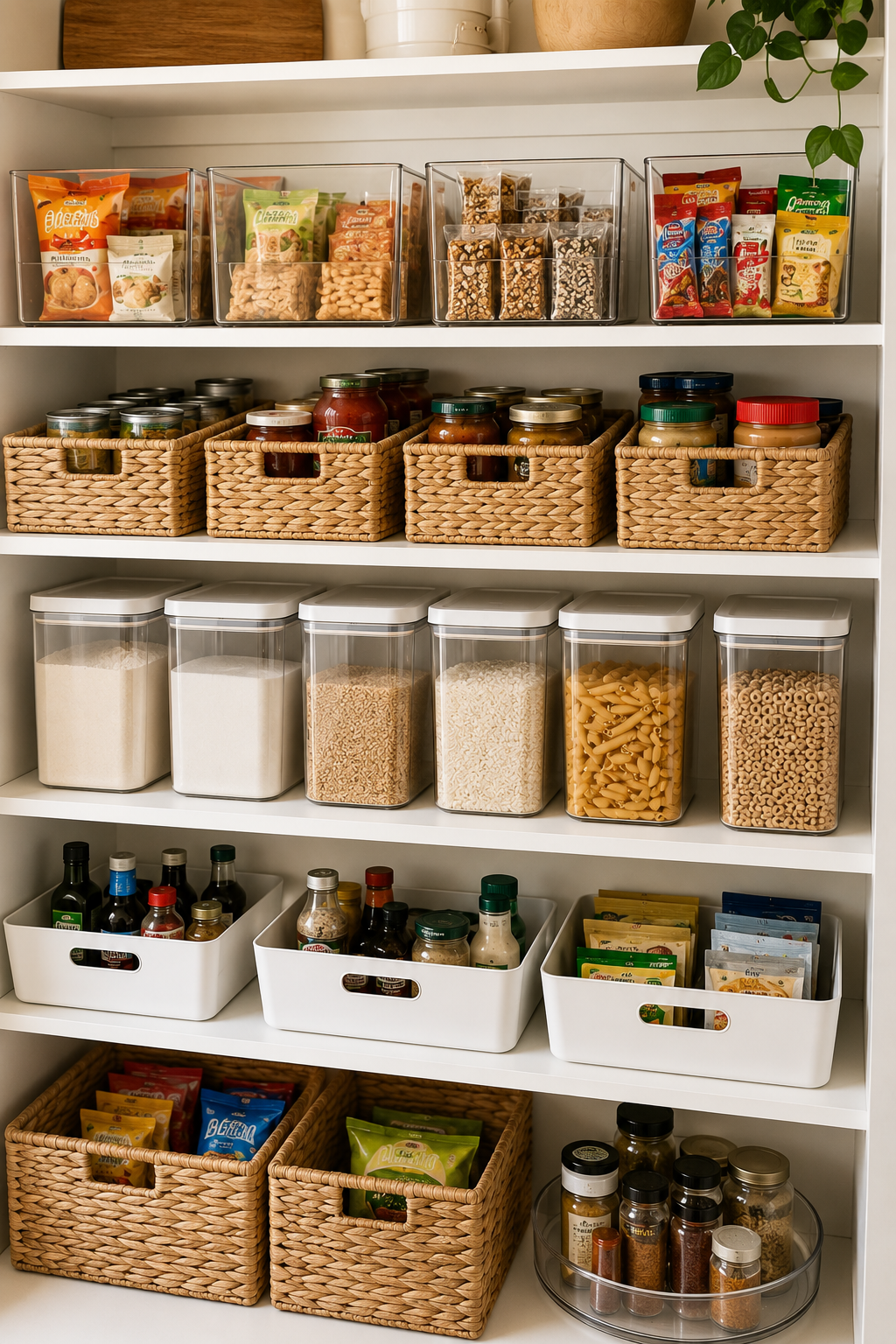
Clear bins are one of my favorite ways to organize a small pantry because you can immediately see what you have.
Instead of having snack bags, boxes, and packages scattered across a shelf, group similar items together. You could have one bin for snacks, one for breakfast foods, one for baking supplies, and another for pasta or dinner ingredients.
You do not need a bin for every single thing in your pantry. That can actually create more work.
Start with the categories that tend to get messy the fastest. Being able to pull out one bin instead of moving six things around to find what you need makes a small pantry feel much more functional.
2. Add Shelf Risers for Canned Goods
Small pantry shelves often have a surprising amount of wasted vertical space.
You might have a row of canned goods sitting on a shelf with another 10 inches of empty space above them. Shelf risers let you use some of that space without installing another shelf.
They are especially helpful for canned foods, jars, sauces, and other shorter items.
As a bonus, putting items at different heights makes it much easier to see what is hiding in the back. No more discovering a can of soup that expired two years ago because it spent its life behind the green beans.
3. Put a Lazy Susan in an Awkward Corner
Lazy Susans are not just for giant Pinterest pantries.
They can be incredibly useful in small spaces, especially when you have a deep shelf or awkward corner where things tend to disappear.
Use one for sauces, oils, condiments, spreads, or small jars. Instead of reaching behind everything, you can simply spin the turntable.
I especially like this idea for items that you use frequently but that are different sizes and do not stack nicely.
4. Use the Back of the Pantry Door
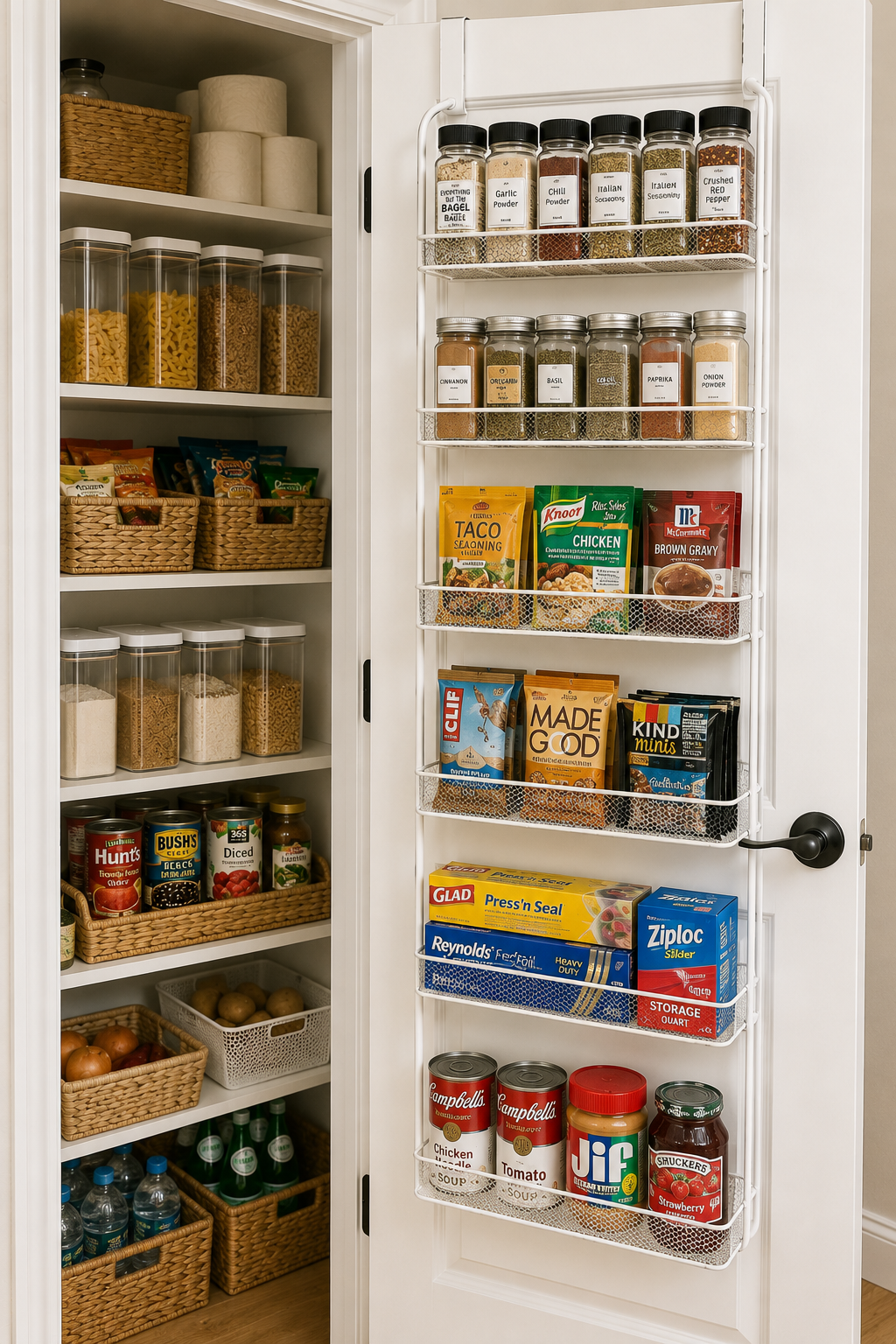
If your small pantry has a traditional door, do not overlook it.
The back of the door is basically an entire storage area that many people never use.
An over-the-door organizer can hold snacks, seasoning packets, wraps, foil, sandwich bags, small jars, or even canned goods if the organizer is sturdy enough.
Just be careful not to make the door so heavy that it becomes difficult to use.
For an especially tiny pantry, adding door storage can make it feel like you gained an extra shelf without actually changing anything inside the pantry.
5. Use Stackable Containers for Dry Goods
Flour bags, sugar bags, cereal boxes, pasta packages, and rice all take up different amounts of space.
That makes pantry shelves difficult to organize.
Stackable containers can help you use vertical space much more efficiently, especially for foods you buy regularly.
But here is my practical advice: do not feel like you need to decant your entire pantry.
Transferring every cracker and pretzel into a matching container looks beautiful, but it can also become another chore.
Use containers where they actually make your life easier.
6. Create a Dedicated Snack Bin
If you have kids, you probably already know exactly why this one deserves its own section.
Snacks multiply.
Instead of having granola bars in one box, crackers somewhere else, fruit snacks behind the cereal, and random individually wrapped things everywhere, create one designated snack area.
Depending on the size of your pantry, you could have one large snack bin or several smaller ones.
Keeping kid-friendly snacks lower also makes it easier for everyone to grab what they need without rearranging the entire pantry.
7. Add Pull-Out Bins to Deep Shelves
Deep pantry shelves sound wonderful until you actually have to find something.
Things in the front get used. Things in the back enter another dimension.
Large pull-out bins solve that problem.
Instead of reaching around other items, pull the entire bin toward you. This works especially well for baking ingredients, extra condiments, bags of chips, pasta, or pantry backstock.
You can essentially turn a deep stationary shelf into a makeshift drawer.
8. Use Baskets for Bulky or Messy Packaging
Not everything needs to be visible.
Sometimes a basket is actually better than a clear container because it hides all the oddly shaped packages that make a pantry look cluttered.
Think bags of chips, bread products, paper goods, extra snacks, or bags of baking ingredients.
A few baskets can instantly make an overcrowded shelf feel calmer without requiring you to reorganize every individual item.
And if you like the pretty pantry look, this is an easy way to get it without replacing every container you own.
9. Organize Your Pantry Into Zones
One of the easiest ways to keep a small pantry organized is to give everything a general home.
Your zones might include:
Breakfast
Snacks
Baking
Pasta and grains
Canned goods
Dinner ingredients
Backstock
They do not need to be perfectly labeled or arranged.
The point is simply that everyone knows approximately where something belongs.
This also makes putting groceries away much faster because you are not standing there holding a box of pasta wondering where you can squeeze it in.
10. Use a Vertical Can Organizer
Canned goods can take over a small pantry surprisingly fast.
If your family uses a lot of canned foods, consider a tiered or vertical organizer.
Instead of spreading cans across an entire shelf, you can organize them upward and make better use of your available height.
Even a simple tiered shelf can help because you will actually be able to see the cans in the back.
The goal is not necessarily to fit more food into your pantry. It is to be able to see and use what you already have.
11. Add Under-Shelf Baskets
Look underneath your pantry shelves.
If there is a big gap between one shelf and the next, an under-shelf basket can turn some of that empty air into usable storage.
These work especially well for lightweight items like wraps, sandwich bags, bread products, napkins, snack bags, or packets.
They are also great if you rent or simply do not want to install permanent shelving.
Slide one onto the existing shelf and suddenly you have another little storage area.
12. Keep Baking Supplies Together
Baking ingredients have a way of ending up everywhere.
Flour is on one shelf. Chocolate chips are on another. Baking powder is hiding behind the spices. Then you start making cookies and spend half the time gathering ingredients.
Try keeping your most-used baking supplies in one area.
You can even use a large bin as a mini baking station. When you need it, pull out the entire bin.
This is especially helpful in a small pantry because you are grouping a lot of little items into one organized space.
13. Use Narrow Bins for Packets and Pouches
Seasoning packets, oatmeal packets, drink mixes, sauce packets and other small packages are pantry clutter magnets.
They fall over. They slide behind things. Somehow you end up with five taco seasoning packets and still buy another one.
Narrow bins are perfect for corralling these smaller items.
You can line up several skinny containers on a shelf without sacrificing much space, and you will finally be able to see what you actually have.
14. Label Your Shelves and Containers
You absolutely do not need a label maker to have an organized pantry.
But labels can be surprisingly helpful.
A simple label that says “Snacks,” “Breakfast” or “Baking” gives everyone in the house a clue about where things should go.
And that is really the secret to maintaining an organized pantry.
The system has to make sense to more than just the person who organized it.
If your family cannot figure out where anything belongs, everything will eventually end up wherever there is an empty spot.
15. Keep Frequently Used Foods at Eye Level
Do not waste the easiest-to-reach shelves on things you use twice a year.
Put your everyday foods where you can easily see and grab them.
For your family, that might be cereal, bread, snacks, peanut butter, pasta, or lunch supplies.
Less frequently used items can go higher or lower.
It sounds obvious, but sometimes we organize based on where something fits instead of how often we actually use it.
A small pantry works much better when convenience determines the layout.
16. Use the Pantry Floor for Oversized Items
The pantry floor is valuable storage space, but it can quickly become a dumping ground.
Instead, give it a purpose.
Use a large basket or bin for oversized items that do not fit well on shelves. This could include bulk packages, drinks, paper towels, reusable shopping bags, or large snack bags.
Keeping these things contained prevents the floor from becoming a pile you have to step over every time you need something.
17. Put Backstock on the Highest Shelf
You probably do not need three jars of pasta sauce within arm's reach.
Keep the items you are currently using in your main pantry zones and move duplicates or extras to the highest shelf.
Think of this area as your mini store.
When something runs out, check your backstock before adding it to the grocery list.
This is also a great way to see whether buying in bulk is actually saving you money or just filling your pantry with six months' worth of crackers.
18. Use Magazine Holders for Awkward Items
This is one of those organizing tricks that sounds a little strange until you try it.
Magazine holders can work well for long, narrow pantry items that are difficult to stack.
Depending on the size, you can use them for boxes of foil, plastic wrap, parchment paper, reusable bags, or even certain packaged foods.
They keep everything upright instead of having it piled horizontally across the shelf.
Sometimes the best small pantry storage solutions are things that were never technically designed for a pantry.
19. Add Hooks for Lightweight Items
If you have a small section of unused wall space, consider adding a few hooks.
They can hold reusable grocery bags, aprons, lightweight baskets, lunch bags, or other pantry supplies.
Adhesive hooks are an easy option if you do not want to drill into the wall.
Just remember that every inch of empty wall does not need to be filled.
Use hooks only when they solve an actual storage problem.
20. Take Individually Wrapped Snacks Out of Bulky Boxes
This one can free up a shocking amount of room.
A cardboard box containing eight granola bars might take up three times as much space as the granola bars themselves.
When you get home from the grocery store, take individually wrapped snacks out of their boxes and place them in your snack bin.
The same trick works for fruit snacks, oatmeal packets, drink mixes and other individually packaged foods.
You will save space and be able to see when you are actually running low.
Just make sure you keep any cooking instructions or expiration information you might need.
21. Leave Some Empty Space
This might be the most important tip on the entire list.
You do not have to fill every inch of your pantry.
I know that sounds strange in an article about maximizing a small pantry, but hear me out.
When every shelf, basket and container is completely full, your pantry becomes difficult to maintain. There is nowhere to put groceries. You have to move three things to get to one thing. And suddenly the whole system feels like more work than it is worth.
A little breathing room makes an organized pantry much easier to keep organized.
You are creating a functional space, not playing pantry Tetris.
How to Organize a Small Pantry Without Spending a Fortune
One of the biggest misconceptions about pantry organization is that you need to go out and buy dozens of matching containers.
You really don't.
Before buying anything, pull everything out of your pantry and see what you already have.
Throw away expired foods. Combine duplicates when it makes sense. Get rid of empty or almost-empty boxes. Then group everything into basic categories.
Only after doing that should you decide whether you actually need organizers.
You might discover that you need two bins and a shelf riser instead of $200 worth of matching containers.
You can also repurpose baskets, bins and containers you already have around your house.
An organized pantry should make your life easier. It should not require a small personal loan at the Container Store.
Make Your Small Pantry Work for Your Family
There is no single perfect way to organize a pantry.
A pantry for a family with several kids is going to look very different from a pantry for someone who loves baking or someone who cooks nearly every meal from scratch.
Pay attention to what gets messy in your pantry.
If snacks are constantly everywhere, start with snack organization.
If you can never find canned goods, fix that shelf first.
If your deep shelves are driving you crazy, add pull-out bins.
You do not need to tackle everything at once.
Pick two or three ideas from this list and see how they work for your family. You can always change the system later.
Because ultimately, the best small pantry organization ideas are not necessarily the prettiest ones.
They are the ones that make it easier to find what you need, put groceries away, avoid buying things you already have, and keep your pantry organized without constantly having to redo it.
And if you can open the pantry door without something falling on you?
I'd call that a win.